Optimizing Wear Protection, Material Flow, and Maintenance Through Engineered Liner Design
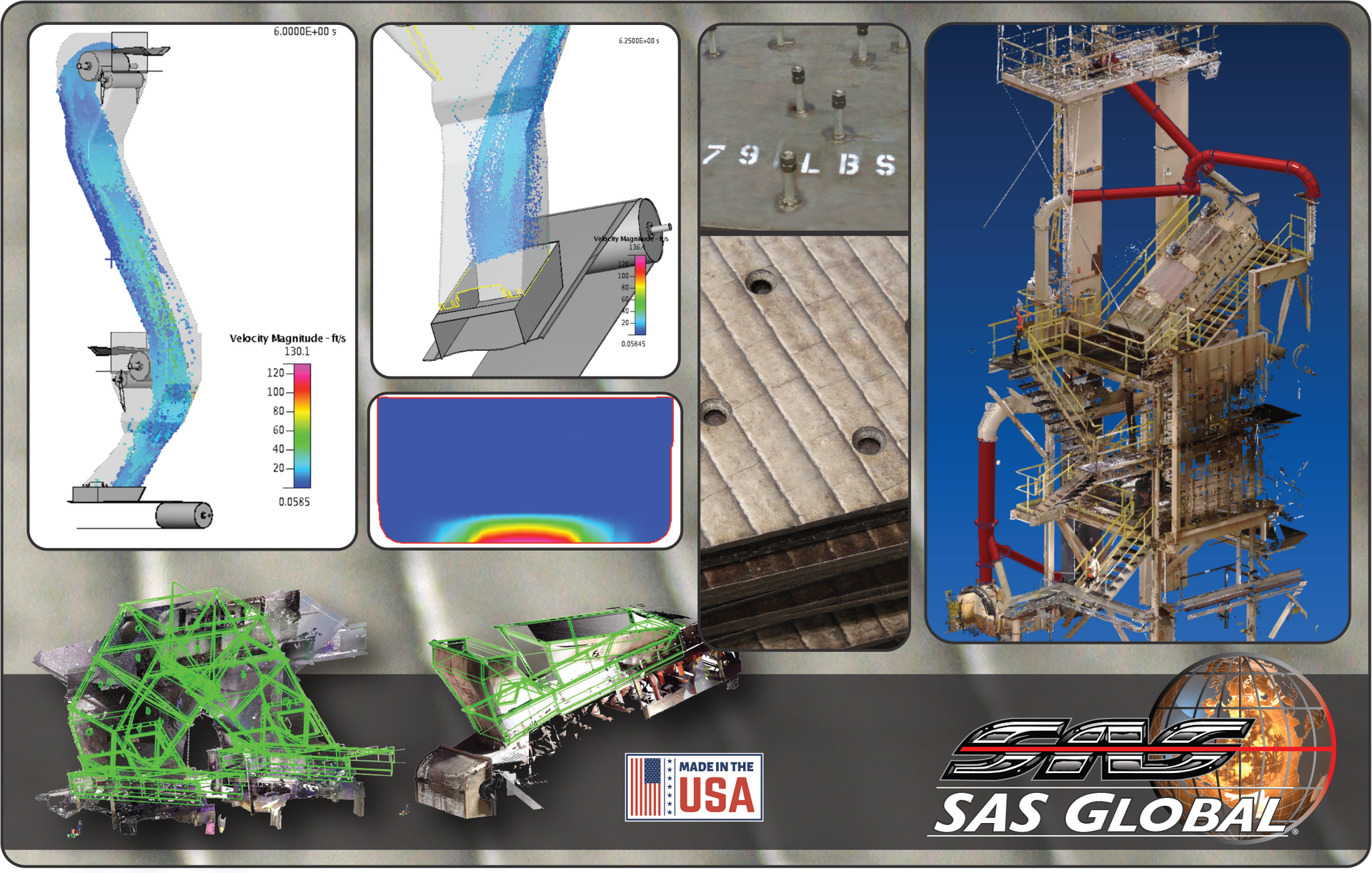
In demanding bulk material handling applications, transfer chute performance depends on more than simply protecting steel surfaces from abrasion. A properly engineered liner system must address material flow, localized wear, impact conditions, maintenance accessibility, and the overall geometry of the chute.
Poorly designed liner systems can create additional problems, including material buildup, premature wear, restricted flow, increased maintenance requirements, and unplanned downtime.
At SAS Global Corporation, we approach transfer chute lining as an integrated engineering solution. By combining
SureAlloy® Premium Carbide Overlay Plates, strategically located replaceable wear liners, coved corner designs, and application-specific material selection, SAS Global develops liner systems engineered to improve operational reliability and reduce total maintenance costs.
The objective is straightforward:
Place the right wear material in the right location, maintain efficient material flow, and make future maintenance easier.
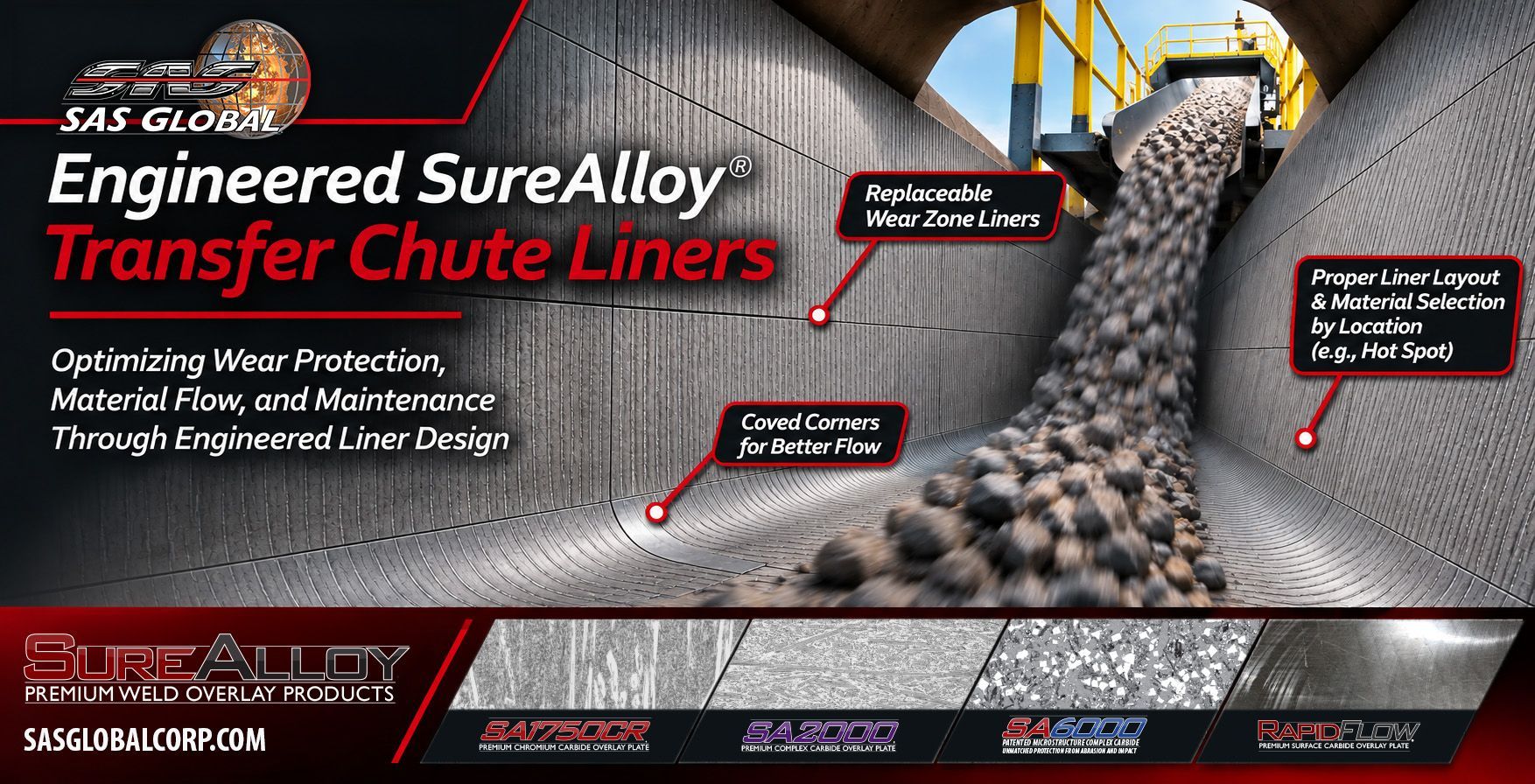
1. Replaceable Wear Zone Liners: Protecting High-Wear Areas Without Replacing the Entire Chute
Wear within a transfer chute is rarely uniform. Certain locations experience significantly greater abrasion and impact because of material velocity, trajectory, particle size, and changes in flow direction.
Common high-wear locations include initial material contact points, directional transitions, chute sidewalls, discharge sections, and areas where material streams become concentrated.
Rather than treating the entire chute as a single wear surface, SAS Global engineers
individual, replaceable SureAlloy liner sections that target specific wear zones.
This approach offers several advantages:
- Localized Replacement: Individual worn liners can be replaced without removing an entire chute lining system.
- Reduced Maintenance Costs: Maintenance is concentrated on the components that actually require replacement.
- Improved Serviceability: Strategically sized liner sections simplify handling, installation, and future changeouts.
- Extended Chute Life: Replaceable wear liners protect the underlying structural steel from abrasive material.
- Material Optimization: Higher-performance wear materials can be concentrated in severe wear locations rather than used throughout the entire chute.
Depending on the application, SAS Global can incorporate bolted, stud-mounted, plug-welded, or SAS QWA™ Quick Wedge Attachment liner systems.
The result is a maintainable wear protection system designed around actual operating conditions rather than a uniform liner arrangement.
2. Coved Corners: Improving Material Flow and Reducing Hang-Up
One frequently overlooked aspect of transfer chute design is the geometry of internal corners.
Traditional square corners and abrupt 90-degree transitions can create locations where material accumulates, particularly when handling moist, sticky, or fine particulate materials.
As material builds up in these areas, it can restrict the effective flow opening, alter material trajectory, and create localized wear patterns. In severe cases, accumulated material can contribute to plugging and additional cleaning requirements.
SAS Global addresses these conditions through engineered coved corner liner designs.
Instead of allowing two flat liner surfaces to intersect at a sharp inside corner, coved corners incorporate a smooth, radiused transition that promotes material movement through the chute.
The benefits of properly engineered coved corners include:
- Reduced material accumulation in internal corners.
- Smoother transitions between chute surfaces.
- Fewer locations where material can become trapped.
- Improved consistency of material flow.
- Reduced need for manual removal of accumulated material.
- More controlled distribution of abrasion across liner surfaces.
Coved corner designs can be particularly effective when combined with
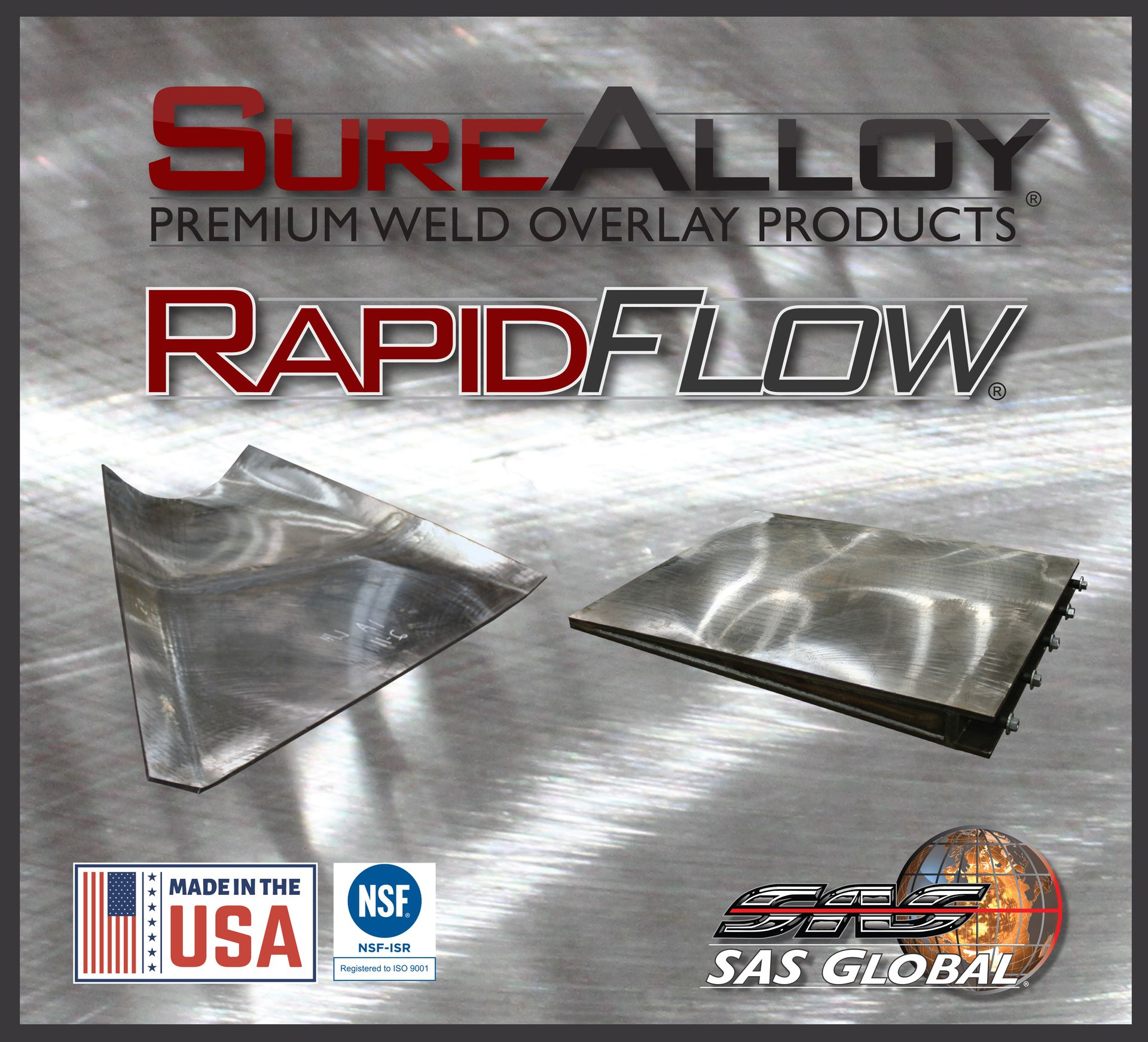
SureAlloy
RapidFlow® Premium Smooth Surface Finish Carbide Overlay Plate, which provides additional resistance to material adhesion and buildup.
The proper corner radius and configuration depend on the material characteristics, chute geometry, and actual flow conditions.
The goal is not simply to create a smoother corner, but to eliminate unnecessary flow restrictions while maintaining effective wear protection.
3. Proper Liner Layout: Engineering the Complete Wear Surface
Even the most advanced wear-resistant material can underperform when the liner arrangement is improperly designed.
Liner layout affects material movement, localized wear, maintenance accessibility, and the ability of the chute to maintain its intended internal geometry.
SAS Global evaluates the complete liner arrangement to develop a system that supports both wear life and material flow.
Material Flow Direction
Liners should be arranged to minimize exposed leading edges that face the direction of material travel. Improperly positioned liner edges can create impact points, accelerate localized wear, and encourage material accumulation.
Liner Joints and Transitions
Liner joints should be positioned to minimize material intrusion, avoid unnecessary protrusions, and maintain a smooth internal wear surface. Where appropriate, staggered joints and engineered transitions can reduce concentrated wear along panel boundaries.
Wear Zone Segmentation
Areas experiencing the greatest abrasion should be separated into practical replacement sections. This allows high-wear panels to be serviced independently of lower-wear areas.
Attachment and Maintenance Access
Liner dimensions, attachment methods, and access requirements should be considered during the initial design. A liner system that provides exceptional wear resistance but is difficult to replace can still create unnecessary maintenance costs.
Maintaining Chute Geometry
The thickness, position, and profile of each liner must be considered to avoid restricting the flow passage or introducing undesirable changes in material trajectory.
By addressing these factors together, SAS Global develops engineered liner layouts that provide a more effective balance of wear resistance, flow performance, and maintenance efficiency.
4. Selecting the Right SureAlloy Wear Material for Each Location
Not every section of a transfer chute experiences the same wear mechanism.
A high-velocity impact area may require different material properties than a chute sidewall exposed primarily to sliding abrasion. Likewise, an area experiencing material buildup may benefit more from an ultra-smooth surface than simply increasing liner hardness.
SAS Global's
SureAlloy Premium Carbide Overlay Plates provide multiple material options to address these different operating conditions.
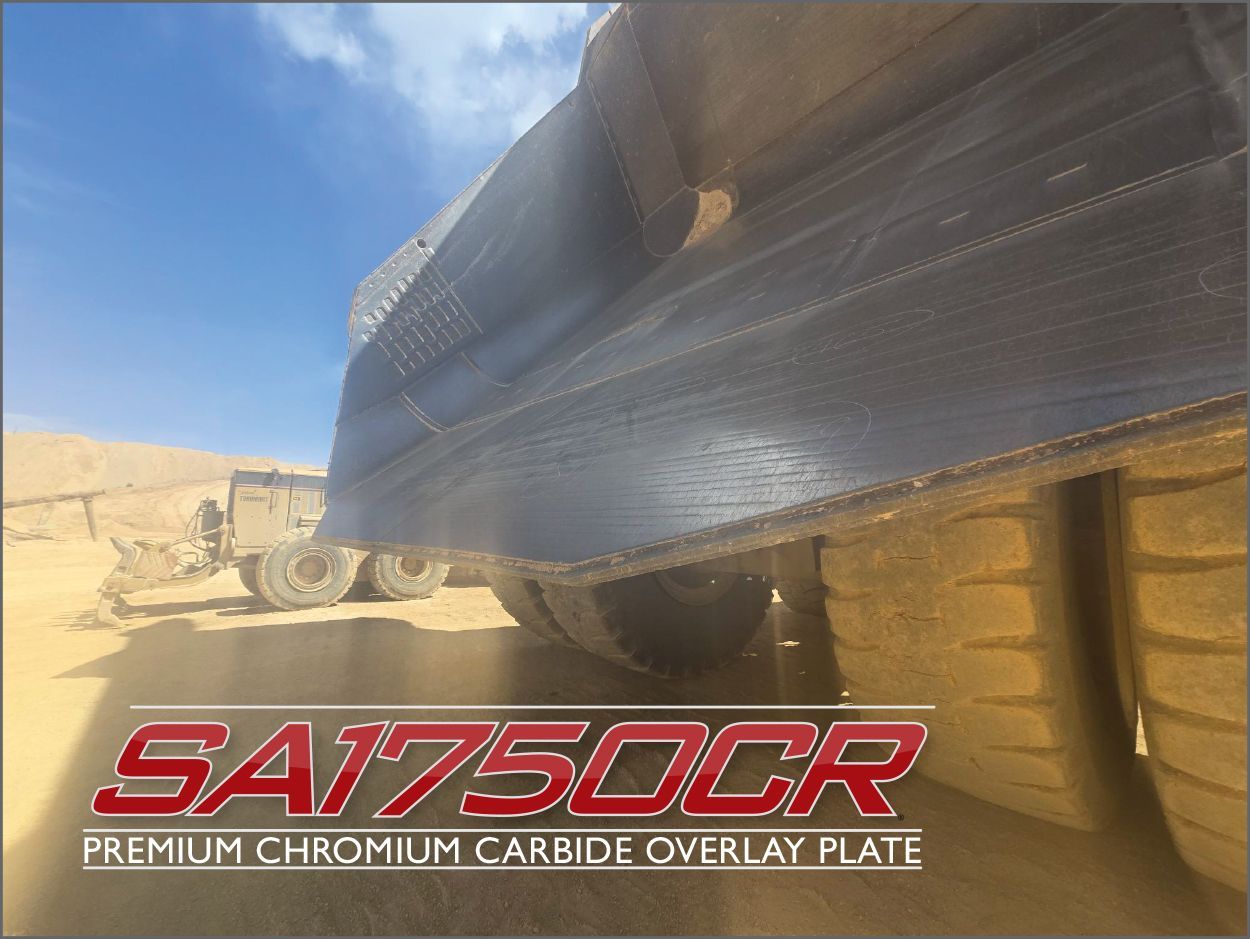
SA1750CR® — Premium Chromium Carbide Overlay Plate
Ideal for: Severe Sliding Abrasion and General Chute Wear Protection
SA1750CR is SAS Global's premium chromium carbide overlay plate, engineered with a hypereutectic matrix containing approximately 50–60% chromium carbides.
This high concentration of hard carbides provides excellent resistance to abrasive material movement.
Typical transfer chute applications include:
- Sliding abrasion zones along chute sidewalls.
- Lower-impact material transfer surfaces.
- General-purpose replaceable wear liners.
- Areas exposed to sustained abrasive material movement.
SA1750CR provides a proven wear protection solution where severe abrasion is the primary concern.
SA2000® — Premium Complex Carbide Overlay Plate
Ideal for: High-Abrasion Areas Requiring Enhanced Wear Resistance & Toughness
SA2000 incorporates a refined complex carbide microstructure designed to provide greater wear resistance than conventional chromium carbide overlay materials.
Its combination of advanced carbide chemistry, abrasion resistance, and improved toughness makes it well suited for demanding transfer chute environments.
Potential applications include:
- High-velocity sliding abrasion zones.
- Directional transitions with concentrated wear.
- Chute discharge areas experiencing abrasive loading.
- Locations requiring increased service life beyond conventional chromium carbide overlays.
SA2000 provides an effective upgrade for areas where existing liners experience accelerated wear.
SA6000® — Patented Microstructure Complex Carbide Overlay Plate
Ideal for: Extreme Wear Hot Spots and Severe Abrasion with Suitable Impact Conditions
Within many transfer chutes, small localized areas experience dramatically greater wear than surrounding surfaces.
These hot spots may develop where material first contacts a chute wall, where a concentrated stream changes direction, or where high-velocity particles repeatedly contact the same surface.
SA6000 features SAS Global's patented, highly refined complex carbide microstructure, engineered to deliver exceptional abrasion resistance with improved impact toughness.
Strategically positioning SA6000 liners in these high-wear locations can provide several advantages:
- Increased resistance to concentrated abrasive wear.
- Improved durability in demanding material contact zones.
- Reduced frequency of localized liner replacement.
- Better protection in areas where standard liners experience premature failure.
For extreme impact conditions, the liner design and suitability of carbide overlay must be evaluated against the expected impact energy and loading.
Rather than specifying SA6000 throughout an entire chute, SAS Global can strategically locate it in critical wear zones where its advanced properties provide the greatest benefit.
RapidFlow® — Premium Smooth Surface Finish Carbide Overlay Plate
Ideal for: Material Hang-Up, Buildup, and Flow-Sensitive Locations
In some transfer chutes, material accumulation is as significant a challenge as abrasive wear.
Wet or sticky materials can adhere to liner surfaces, creating restricted flow, increased carryback, and additional maintenance requirements.
SureAlloy RapidFlow addresses these challenges through a specialized smooth surface finish. The carbide overlay is Blanchard-ground and precision-polished to approximately 0.2–0.3 Ra micrometers.
This ultra-smooth finish helps reduce friction and material adhesion while retaining the wear-resistant characteristics of the selected SureAlloy grade.
RapidFlow is available across the SureAlloy Premium Carbide Overlay Plate product family, allowing abrasion resistance and flow characteristics to be optimized together.
Common applications include:
- Coved corners and internal chute transitions.
- Material buildup and hang-up locations.
- Moist or sticky material handling zones.
- Lower chute sections where maintaining consistent discharge is critical.
- Areas where reduced surface friction can improve material movement.
Combining RapidFlow with strategically engineered chute geometry provides a comprehensive approach to controlling material accumulation.
5. Combining Multiple SureAlloy Grades in One Engineered Liner System
One of the most effective approaches to transfer chute wear protection is to use multiple SureAlloy grades within the same chute.
Consider a transfer chute handling highly abrasive mined material.
The initial material contact area may experience concentrated abrasion and impact loading, making SA6000 a suitable option following evaluation of the actual impact conditions.
The lower transition section may experience severe sliding abrasion, where SA2000 can provide enhanced wear resistance.
General chute sidewalls may be effectively protected with SA1750CR.
Meanwhile, internal corners and buildup-prone areas may benefit from coved designs incorporating RapidFlow smooth-finish liners.
This
zone-specific material selection strategy allows the liner system to be engineered around the demands of each location.
Rather than increasing liner thickness or specifying the most advanced material throughout the chute, SAS Global focuses on selecting the appropriate carbide overlay grade, liner configuration, and replacement strategy for each wear zone.
The result is a more balanced approach to wear life, material utilization, and long-term maintenance costs.
6. Designing for Long-Term Maintenance and Lower Cost Per Ton
The initial purchase price of a liner system represents only one part of its total operating cost.
Frequent liner replacements, unexpected shutdowns, material buildup, cleaning labor, and damage to structural chute components can significantly increase the long-term cost of operating a transfer point.
An engineered SureAlloy liner system addresses these issues by combining:
- Premium carbide overlay materials selected for specific wear conditions.
- Replaceable liner sections concentrated in high-wear areas.
- Coved corner configurations that minimize material trapping.
- Proper liner orientation and joint placement.
- Low-friction RapidFlow surfaces where improved material movement is needed.
- Attachment systems designed for practical installation and future maintenance.
When these elements are properly integrated, facilities can improve liner service life, reduce unnecessary changeouts, and maintain more consistent chute performance.
The ultimate objective is to minimize the
total cost per ton of material handled, not simply the cost of the initial liner installation.
7. SAS Global: Engineering More Than Wear Protection
At SAS Global Corporation, transfer chute lining is more than a material selection process.
Our approach considers how the material enters the chute, where it contacts the liner surfaces, how it changes direction, where abrasive wear is concentrated, and how the system will be maintained throughout its operating life.
By combining application-specific engineering with our proprietary SureAlloy Premium Carbide Overlay Plate technologies, SAS Global provides custom liner solutions designed for demanding mining, aggregate, cement, power generation, and industrial bulk material handling applications.
Whether upgrading an existing transfer chute or developing a new liner system, SAS Global can help identify opportunities to improve wear protection, reduce material hang-up, and simplify maintenance.
The best transfer chute liner system is not simply the one with the hardest material. It is the one engineered to provide the right wear protection, in the right location, while keeping material moving efficiently.
Improve Your Transfer Chute Performance with SAS Global
Experiencing premature chute liner wear, recurring material buildup, or frequent maintenance shutdowns?
SAS Global can evaluate your transfer chute operating conditions and develop a custom-engineered SureAlloy liner solution that addresses wear, material flow, and long-term serviceability.
Explore our
Wear-Resistant Chutes, Hoppers & Custom Liner Systems or
contact SAS Global Corporation to discuss your application.
SAS Global Corporation — Engineered Wear Solutions. Built for Performance.